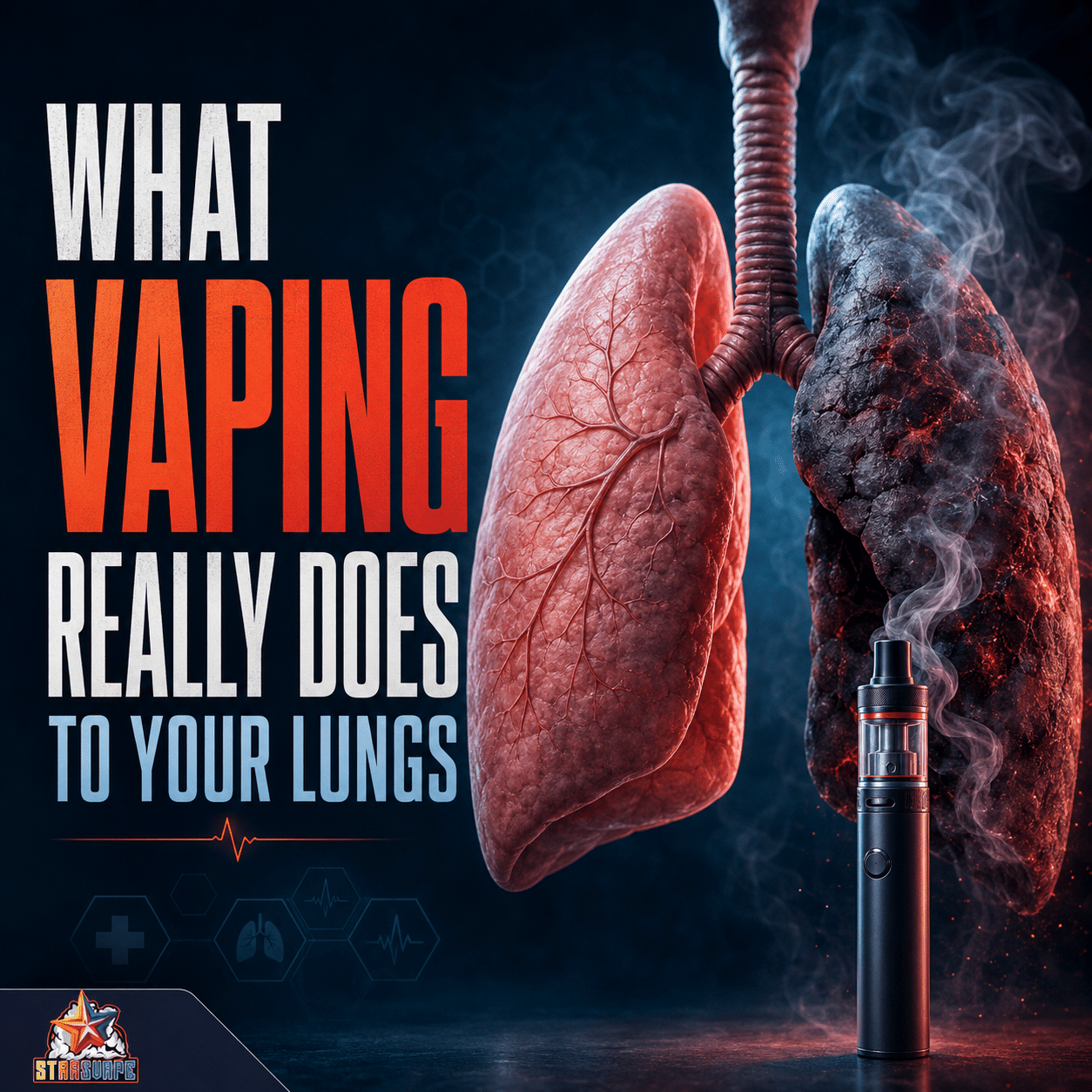
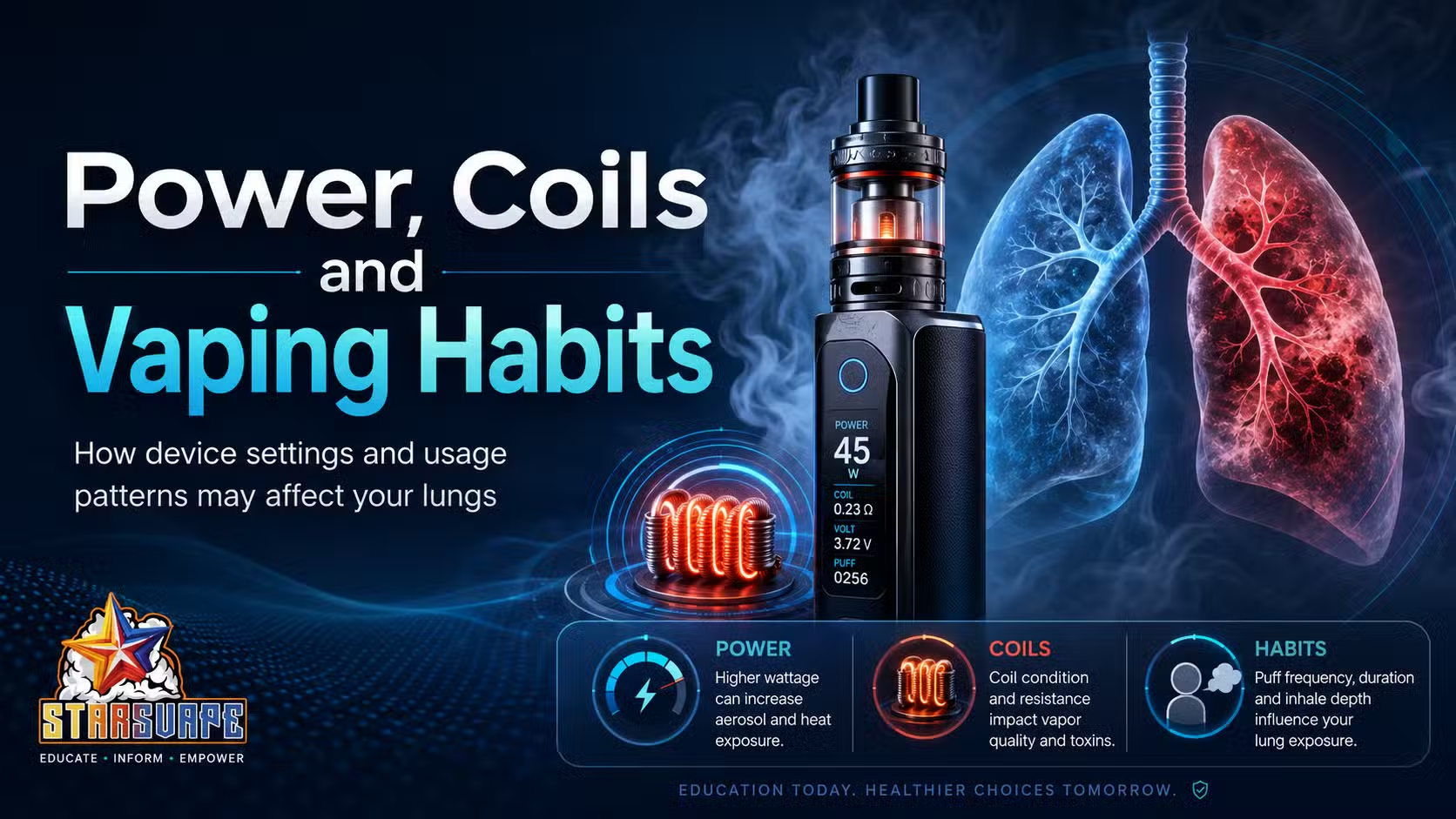
Direct Answer: Vaping sends an aerosol—not harmless water vapour—into your airways and lungs. That aerosol may contain nicotine, tiny particles, flavouring chemicals, volatile compounds and trace metals. It can irritate the respiratory tract, while the amount inhaled changes with the device, coil, power setting and vaping pattern. The full long-term effects are still being studied.
What Actually Enters Your Lungs When You Vape?
A vape uses battery power to heat e-liquid through a coil. The liquid becomes an aerosol that is inhaled through the mouthpiece and carried into the respiratory system.
This aerosol commonly contains propylene glycol, vegetable glycerin, nicotine and flavouring ingredients. Depending on the product and heating conditions, it may also contain ultrafine particles, volatile organic compounds, carbonyl compounds and metals such as nickel, chromium, tin or lead. E-cigarette aerosol is therefore not the same as ordinary steam or water vapour.
Not every vape produces exactly the same aerosol. The composition can change according to:
- The e-liquid formula
- Nicotine concentration
- Coil material and condition
- Device power
- Heating temperature
- Luftstrøm
- Puff length
- Frequency of use
An ingredient that is acceptable in food is not automatically suitable for repeated inhalation. The lungs and digestive system process chemicals differently.
What Vaping May Do to Your Airways
The first areas exposed are the mouth, throat and airways. Some users experience dryness, throat irritation, coughing, wheezing, chest tightness or unusual breathlessness.
These symptoms may result from direct irritation of the airway lining. Repeated exposure may also influence inflammation and oxidative stress, which are biological responses to irritants and reactive chemicals.
The airways normally use mucus and tiny hair-like structures called cilia to trap and clear particles. Laboratory and animal studies suggest that vape aerosol may affect mucus, ciliary activity and inflammatory signalling. However, these studies do not prove that every person who vapes will develop permanent lung disease.
Human research has found associations between vaping and respiratory symptoms, but the quality of evidence varies. Previous smoking, dual use, asthma, infections and different product types can make the results difficult to interpret. A recent evidence review found increased respiratory symptoms among people who vaped compared with people who had never vaped, while symptoms were generally less common than among current smokers or dual users.
In practical terms, current evidence supports the conclusion that vaping can irritate the respiratory system. It does not support claims that every user will develop the same disease or suffer immediate permanent lung damage.
Why Power, Coils and Vaping Habits Matter
The amount written on a product label does not fully describe what reaches the lungs. Device condition and user behaviour can significantly change aerosol output.
Power and Temperature
Higher power usually heats more liquid and creates more aerosol. When a device is operated above the range intended for its coil, the higher temperature may increase the formation of carbonyl compounds such as formaldehyde, acetaldehyde and acrolein.
In one laboratory study, carbonyl emissions increased sharply when power exceeded the coil manufacturer’s recommended range. This does not provide a universal “safe wattage,” because coils and devices are designed differently. It does show why extreme power settings and abnormal overheating should be avoided.
A larger visible cloud generally means more liquid has been aerosolised. It does not reveal exactly which chemicals are present or prove that the aerosol is safer.
Burnt or Damaged Coils
A persistent burnt taste may indicate that the wick is dry, the liquid is not feeding correctly or the coil is overheating.
Continuing to use a burnt, damaged or unusually hot device may change the emissions being inhaled. Coil components can also contribute metals to the liquid or aerosol, although amounts vary widely between products.
Stop using a device if it:
- Produces a persistent burnt taste
- Leaks heavily
- Becomes unusually hot
- Has a cracked housing
- Has a swollen battery
- Activates unexpectedly
- Has a damaged charging port
A new or dual-mesh coil may provide more even heating and greater aerosol output, but it does not remove the health risks of inhaling aerosol.
Puff Length and Frequency
A long puff usually produces and delivers more aerosol than a short puff. Repeated back-to-back inhalation may also prevent the coil from cooling or the wick from absorbing enough liquid.
This means advertised puff counts are not fixed measurements of exposure. Two people using the same device may inhale very different amounts depending on puff duration, power mode, airflow and daily frequency.
Vaping Versus Smoking: The Important Difference
Cigarettes burn tobacco. This combustion creates smoke containing thousands of chemicals and is a major cause of lung cancer, COPD and other diseases.
Vapes generally do not burn tobacco. Evidence from England indicates that people who vape are typically exposed to lower levels of many harmful substances than people who smoke cigarettes. However, exposure is still higher than among people who neither smoke nor vape.
That leads to three important conclusions:
- Vaping is not harmless.
- For an adult who smokes, switching completely may reduce exposure to many cigarette-smoke toxicants.
- Using cigarettes and vapes together may preserve substantial exposure to smoke.
The CDC warns that dual use is not an effective way to protect health and may produce worse respiratory outcomes than using either product alone.
A 2025 Cochrane review found that nicotine e-cigarettes helped more adults stop smoking than nicotine-replacement therapy in the studies reviewed. That finding relates to smoking cessation, not proof that long-term vaping is risk-free. Safety evidence for newer products and very long-term use remains incomplete.
People who do not smoke or use nicotine should not start vaping. Adults seeking to stop smoking or nicotine use should discuss suitable options with a qualified healthcare professional.
What EVALI Was—and What It Was Not
EVALI means e-cigarette, or vaping, product use-associated lung injury. It is a serious acute lung injury, not a general name for every cough caused by vaping.
During the 2019 United States outbreak, most patients reported using THC-containing vaping products, especially products obtained through informal sources. Vitamin E acetate was strongly linked to the outbreak, although other chemicals could not be completely ruled out.
This does not mean every nicotine vape caused EVALI. It also does not mean ordinary nicotine vaping has no respiratory effects.
Adult consumers should avoid:
- Informal or black-market cartridges
- Unknown THC liquids
- Homemade e-liquids
- Oils or vitamin additives
- Modified devices
- Products with unclear ingredients or origins
Nothing not intended by the manufacturer should be added to a vaping device.
Can Your Lungs Recover After You Stop Vaping?
Removing the exposure gives irritated airways an opportunity to recover. Some people may notice that coughing, dryness or breathing discomfort improves after reducing or stopping vaping.
There is no reliable recovery timeline that applies to everyone. Recovery may depend on:
- How frequently and how long the person vaped
- Whether they previously smoked
- Whether they still smoke
- Asthma or COPD
- Recent respiratory infections
- The products and settings used
- Other workplace or environmental exposures
It would be inaccurate to promise that the lungs will be completely restored within a set number of days. Persistent symptoms should be assessed rather than explained as a normal “cleansing” process.
Signs You Should Not Ignore
Arrange a medical appointment for symptoms such as:
- A cough that persists or becomes worse
- Repeated wheezing
- Shortness of breath during ordinary activity
- Reduced exercise tolerance
- Recurring chest tightness
- Increased mucus
- Symptoms that repeatedly worsen after vaping
These symptoms are not specific to vaping. Asthma, infection, allergies, smoking, heart conditions and other illnesses may cause similar problems.
Contact local emergency medical services for severe difficulty breathing, inability to speak normally because of breathlessness, serious chest pain, confusion, loss of consciousness, blue or grey lips, or coughing up blood.
Practical Ways to Reduce Exposure
The most effective way to eliminate vape-related lung exposure is to stop inhaling vape aerosol.
Adults who continue to vape can reduce avoidable risks by:
- Avoiding counterfeit and unverified products
- Not adding oils, vitamins or unknown liquids
- Stopping use when a device tastes burnt or overheats
- Avoiding extreme power settings
- Avoiding repeated long or back-to-back puffs
- Following the manufacturer’s charging instructions
- Not modifying disposable devices
- Avoiding informal-source THC cartridges
- Treating persistent respiratory symptoms seriously
- Seeking professional support when stopping smoking, vaping or nicotine
These measures may reduce preventable problems, but they cannot make vaping risk-free.
Den nederste linje
Vaping exposes the lungs to a chemically complex aerosol rather than harmless water vapour. That aerosol can irritate the airways, and the amount inhaled depends on the liquid, device, coil, power setting and user behaviour.
Research supports concerns about coughing, wheezing, respiratory irritation and biological changes related to inflammation. However, many long-term questions remain unanswered, and not every observed association proves that vaping directly caused a particular disease.
Compared with smoking, vaping generally avoids tobacco combustion and may reduce exposure to many harmful chemicals when an adult smoker switches completely. That does not make vaping harmless, and long-term dual use is not an ideal solution.
Product authenticity and intact packaging may reduce uncertainties associated with counterfeiting or contamination, but legitimate products still create aerosol. Anyone experiencing persistent or severe breathing symptoms should seek medical advice rather than relying on online self-diagnosis.
Ofte stillede spørgsmål
Is vaping just water vapour?
No. Vaping produces an aerosol containing liquid droplets, particles and chemicals. Depending on the product, it may include nicotine, PG, VG, flavourings, volatile compounds and metals.
Can a burnt coil affect what you inhale?
Yes. A burnt taste may indicate poor liquid supply, damaged wick material or overheating. These conditions can change aerosol emissions. Stop using a device that repeatedly tastes burnt or becomes unusually hot.
Does higher power mean greater lung exposure?
Higher power generally produces more aerosol. Excessive power or insufficient liquid supply may also increase some heating by-products. There is no single safe power level suitable for every device.
Is vaping less harmful than smoking?
Vaping generally exposes users to fewer combustion-related toxicants than cigarette smoking. However, it is not harmless. The comparison is most relevant to adult smokers who switch completely rather than continuing to use both products.
Does buying an authentic vape make vaping safe?
No. Authentic products may reduce uncertainties related to counterfeiting, unknown ingredients or damage, but they still produce an aerosol that enters the lungs.
Starsvape’s Responsible Retailing Statement
Starsvape serves adult consumers who meet the legal purchasing-age requirements in their location. We support clear nicotine labelling, transparent device specifications and responsible information about coils, batteries, power modes and product condition.
Vaping products are not risk-free, and legitimate retail supply does not make aerosol harmless. Counterfeit, damaged, modified and unverified products should be avoided.