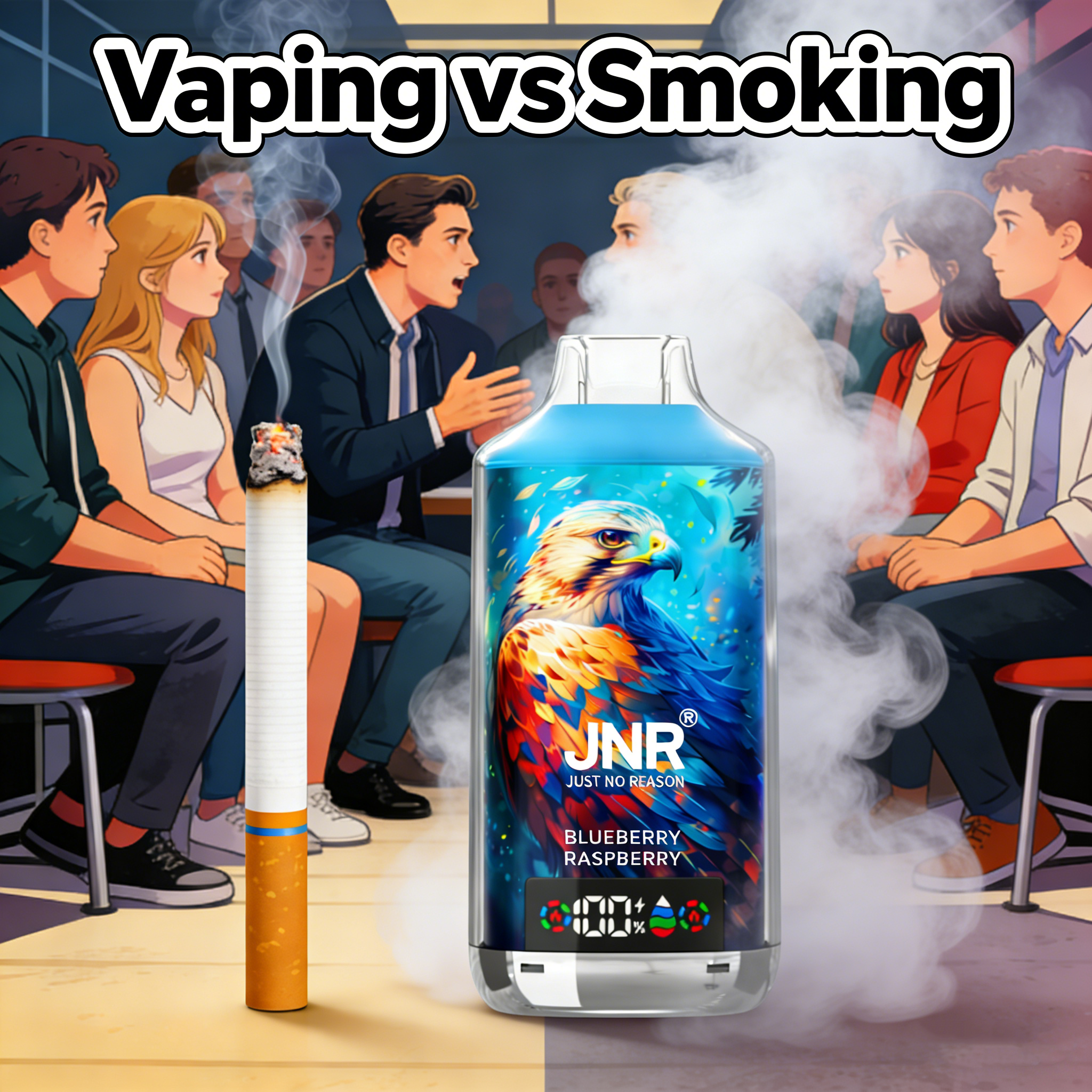
For years, vaping and traditional cigarettes have been discussed side by side. Many adult smokers want a simple answer: when science, cost, design, and day-to-day convenience are compared, which option makes more sense in modern life?
The first thing to make clear is this: neither smoking nor vaping is risk-free. Public health authorities say no tobacco product is completely safe, and e-cigarettes should not be used by youth, young adults, pregnant women, or people who have never smoked. At the same time, some health agencies also note that for adult smokers who fully switch from combustible cigarettes, vaping may be less harmful than continued smoking, although the long-term effects are still being studied.
So the real question is not “Should non-smokers start vaping?” The answer to that is no. The more relevant question is: for adults who already smoke, how does vaping compare with traditional cigarettes in everyday use? Based on current public health guidance, combustible cigarettes remain the more harmful option because they involve burning tobacco and exposing the user to smoke from combustion. Vaping is not harmless, but several health authorities describe it as less harmful than smoking for adult smokers who switch completely.
A Practical Comparison: Vaping vs Traditional Cigarettes
| Category |
Traditional Cigarettes |
Vaping / E-Cigarettes |
| Basic health context |
Burning tobacco creates smoke and many toxic byproducts; smoking remains one of the most harmful nicotine-use methods. |
Not harmless, usually contains nicotine, and still exposes users to toxic substances; however, several health bodies say it can be less harmful than smoking for adults who fully switch. |
| Suitability for youth / non-smokers |
Not appropriate. |
Also not appropriate; CDC and NHS say youth, young adults, children, and non-smokers should not vape. |
| Appearance and product variety |
Standardized stick shape with limited visual variation. |
Available in many device styles, finishes, sizes, and formats, which many adult users see as more customizable. |
| Cost and pace of use |
Repeated pack purchases can become expensive over time; cigarettes are consumed quickly once lit. |
Device and puff capacity can make usage feel more flexible; real value depends on product type, brand, and individual consumption habits. |
| Effect on people nearby |
Second-hand smoke is well established as harmful and socially disruptive in public or shared spaces. |
Aerosol is not harmless and can expose bystanders to nicotine and other substances, but it does not create traditional tobacco smoke. |
| Smell and residue |
Strong smoke smell and lingering ash / residue are common. |
Usually less persistent odor and no ash from burned tobacco. |
| Use case for adult smokers |
Continues exposure to combustible tobacco smoke. |
Sometimes chosen by adult smokers trying to move away from combustible cigarettes; complete switching matters more than dual use. |

1) Looking at the Science
From a scientific standpoint, the biggest difference is combustion. Traditional cigarettes burn tobacco, and that process creates smoke along with a large number of harmful substances. That is why mainstream public health guidance continues to place cigarette smoking among the most harmful forms of nicotine use. Recent UK public health guidance and NHS pages state that vaping is less harmful than smoking for adults who already smoke, but they also stress that vaping is no harmless and should not be used by children or non-smokers.
For younger people in particular, the message from health authorities is direct: do not start. The CDC states that no tobacco products, including e-cigarettes, are safe for children, teens, and young adults, and notes that nicotine can affect the developing brain.
2) Design and Appearance
Traditional cigarettes have stayed visually similar for decades: a small paper-wrapped tobacco stick with little room for variation. Vaping products, by contrast, come in a wide range of device styles, sizes, colors, and user experiences. For adult consumers, this broader design range is often seen as more modern and more personalized.
That said, appearance should never be the main reason to choose a nicotine product. For adults who already smoke, design may improve convenience and preference, but the more important issue is whether a product helps them move away from combustible tobacco rather than continue using both. Public health guidance suggests that complete substitution matters more than simply adding vaping on top of smoking.
3) Value for Money
Many smokers feel the cost of cigarettes adds up quickly because each cigarette is single-use and burns fast. By comparison, many vape products are marketed around puff count, battery life, or refill capacity, which can make the experience feel longer-lasting and more controlled.
Still, it is important to keep this section realistic: actual cost-effectiveness depends on how heavily a person uses nicotine, what local taxes look like, and which product category they choose. A responsible blog should avoid claiming that vaping is always cheaper in every market. A safer and more accurate way to say it is this: many adult users perceive vaping as offering more flexibility and potentially better value over time than buying cigarettes repeatedly.
4) External Impact and Social Experience
One of the biggest drawbacks of traditional cigarettes is the impact on people nearby. Second-hand smoke has long been recognized as harmful, and smoking in public spaces is widely seen as unpleasant because of the smell, smoke, and lingering residue.
Vaping changes that experience, but it does not eliminate concern. WHO states that e-cigarette emissions can contain nicotine and other toxic substances that may affect both users and non-users exposed to second-hand aerosol. In other words, vaping may reduce some of the problems people associate with cigarette smoke, but it should not be described as harmless to bystanders.
So, Which Makes More Sense Today?
Para young people, non-smokers, and anyone under the legal age, neither option is a good choice. Health authorities are clear on that point.
Para adult smokers, the comparison looks different. Traditional cigarettes remain the more harmful product because they rely on burning tobacco. Vaping is still not risk-free, but some major health authorities say it may be a less harmful alternative for adults who already smoke and switch completely away from cigarettes.
Reflexiones finales
If you are writing for an adult audience, the most responsible conclusion is this: vaping should not be promoted as a lifestyle trend for young people, but for adult smokers looking to move away from combustible cigarettes, it is often discussed as a lower-harm alternative rather than a harmless one. Clear information, legal-age compliance, and honest product positioning matter far more than hype.
En Starsvape, your blog can reflect that responsible approach by focusing on adult users, authenticity, product transparency, and informed choice rather than youth-oriented promotion.